Request a report

ENT research guided by objective functional data.

An advanced scientific tool for research in otolaryngology, delivering precise functional analysis that provides objective information on nasal airflow.

More information
ENT doctor explaining the results of a Flowgy CFD analysis to his patient.
Discover Flowgy

At Flowgy, we understand the complexity of the functional study of nasal obstructions.

Therefore, we have developed a scientific tool that leverages Computational Fluid Dynamics (CFD) techniques to simulate nasal airflow.

Our goal is to provide ENT specialists with objective and detailed analyses of how nasal structures impact airflow and resistance, complementing traditional radiological studies.

Two types of reports to elevate your clinic to the next level.
Basal Functional Report

Functional analysis of airflow in the nasal cavity based on a CT scan of the patient’s head, utilizing computational fluid dynamics techniques.

The results provide objective and quantitative information on the behavior of airflow within the nasal anatomy of each case, for research purposes.

Nasal CFD Study Report

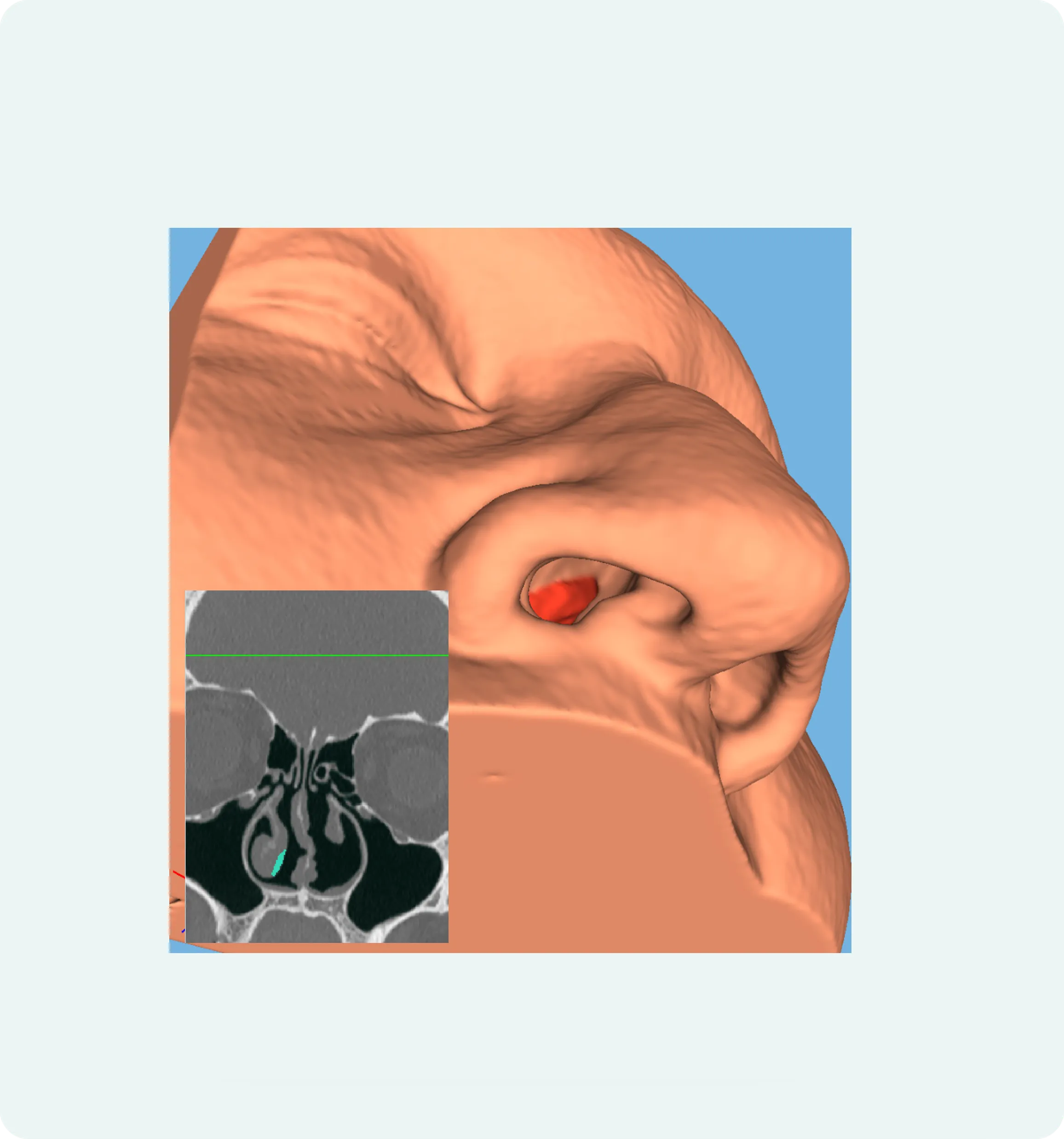
Personalized analysis of airflow in the nasal cavity based on a CT scan of the patient.

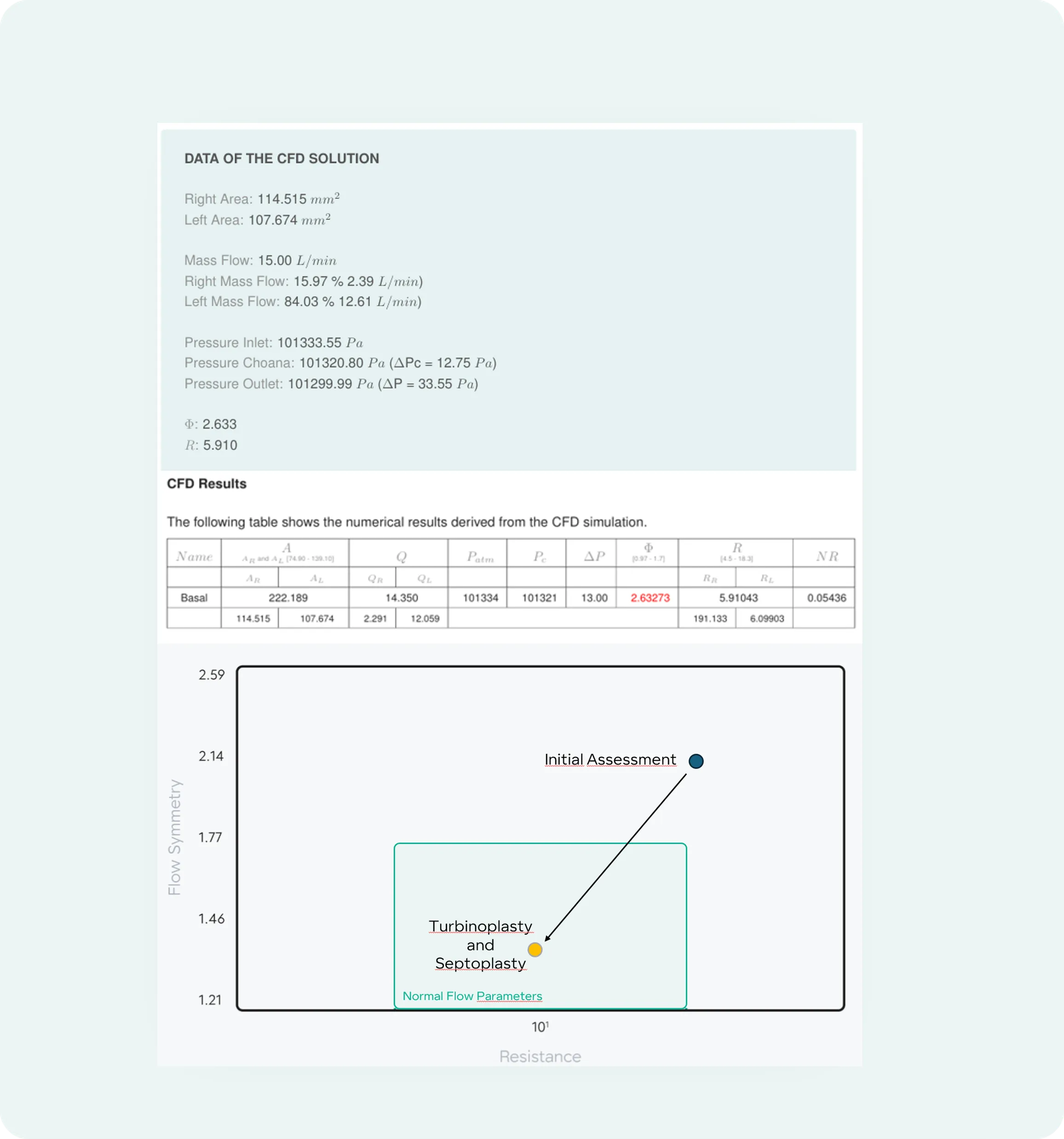
This study allows virtual modifications to the nasal anatomical structure of the case through CFD simulation and a comparison of their aerodynamic effect against the baseline case.

Key Advantages of Flowgy

An integral solution for the study of nasal obstruction.

With cutting-edge CFD technology, Flowgy provides objective functional data on nasal airflow for your research projects.

Advanced Functional Analysis

Flowgy's Basal Functional Reports provide scientific information on nasal functional capacity, resulting in a more objective functional assessment for your research projects.

Complement to Traditional Radiology: While radiological imaging offers an anatomical view, Flowgy provides a functional perspective by analyzing how structural variations affect nasal airflow.
Personalized Simulation: Each analysis is tailored to the unique characteristics of each patient.

Objective Data for Informed Decisions

Flowgy's Basal Functional Reports provide scientific information on nasal functional capacity, resulting in a more objective functional assessment for your research projects.

Flow and Resistance Measurement: We provide quantitative data on airflow and nasal resistance for your research projects.
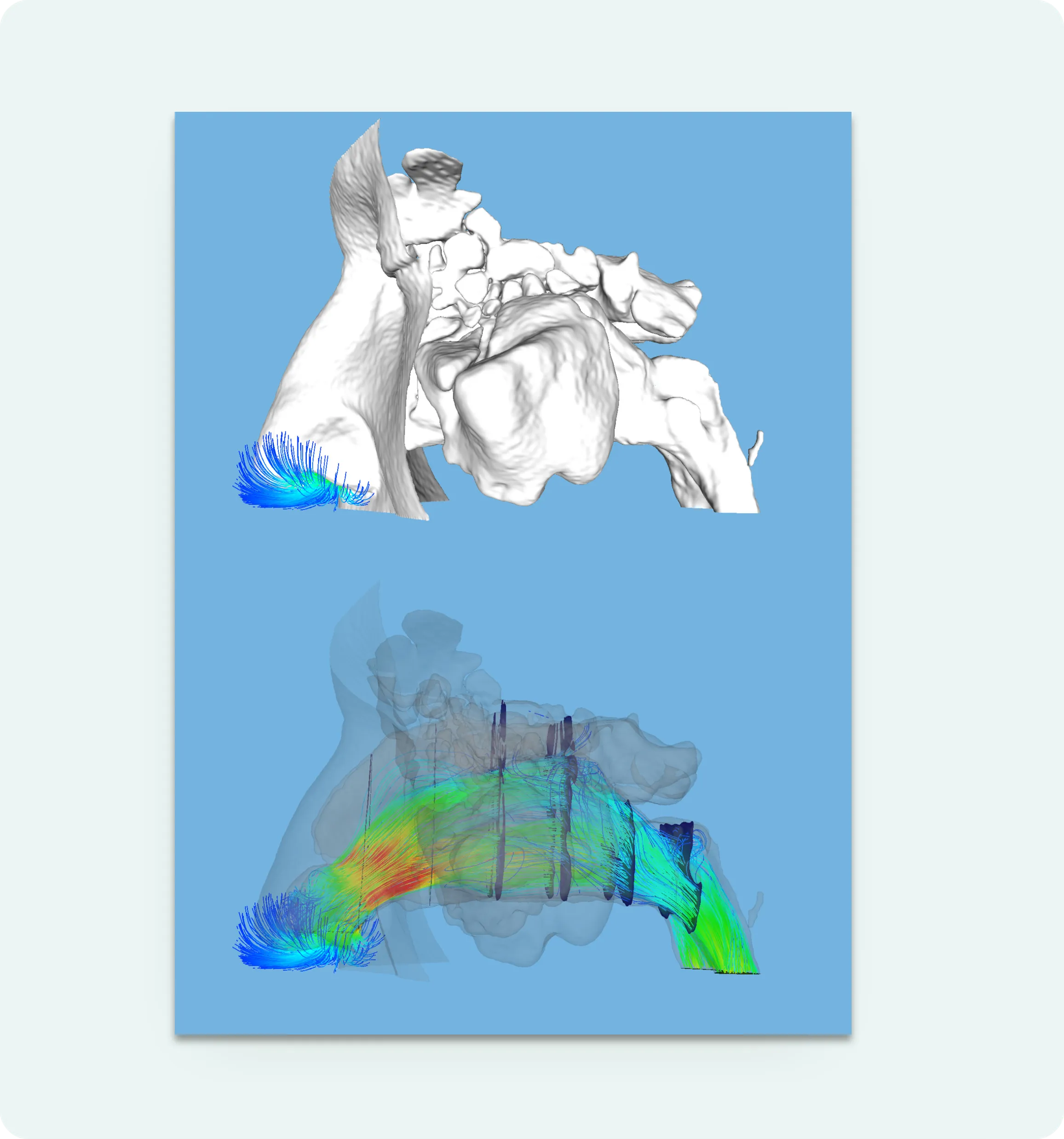
Detailed Visualization: We generate flow maps that identify turbulence and obstruction areas, providing a clearer understanding of the problem.

Seamless Integration into your Research Work

Flowgy's Basal Functional Reports provide scientific information on nasal functional capacity, resulting in a more objective functional assessment for your research projects.

Compatibility with Existing Tools: Flowgy seamlessly integrates with imaging systems and surgical software, without disrupting your regular workflow.
Efficient Process: Our team provides support and training to ensure a smooth and effective implementation.

Use Cases & Practical Benefits

Plan with precision, evaluate outcomes with clarity, and leverage clinical research and education, all in one tool.
1
CFD Simulation

Sign up on the Flowgy platform and easily provide the computed tomography scans of the patient's head in a matter of seconds.

Identification of Critical Areas: By visualizing areas of high resistance or turbulent flow, you can focus your interventions on the areas that most impact the patient’s symptoms.
Pre- and Post-Surgical Benchmarking: Objectively evaluate the impact of your interventions through comparative analysis to improve documentation and results follow-up.
2
Postoperative Follow-up and Evaluation

Sign up on the Flowgy platform and easily provide the computed tomography scans of the patient's head in a matter of seconds.

Pre- and Post-Surgical Benchmarking: Objectively evaluate the impact of your interventions through comparative analysis, improving documentation and follow-up of results.
3
Research & Education

Sign up on the Flowgy platform and easily provide the computed tomography scans of the patient's head in a matter of seconds.

Scientific Advancement: Use Flowgy to investigate new techniques and better understand nasal physiology.
ducational Tool: Share visualizations and analysis with residents and colleagues to enhance learning and foster clinical discussions.
See all our plans and prices
Frequently Asked Questions

How does Flowgy consider physiological variables such as the nasal cycle?

We understand that the nasal cycle is a physiological phenomenon that affects airflow. The parameters Flowgy uses to define nasal obstruction take into account precisely the effects of the nasal cycle, which means that these parameters are immune to the stage of the nasal cycle at which the CT is performed. This ensures that the analysis provided is consistent and reliable, regardless of when the images are acquired.

How does Flowgy integrate with my surgical workflow?

Flowgy is designed to be a complementary tool that integrates seamlessly into your work. We provide training and technical support to facilitate its use, and our reports can be incorporated into your research projects and multidisciplinary discussions.

What limitations does Flowgy have and how does this affect my research projects?

Flowgy provides functional information based on CFD simulation, but it is not a surgical prediction tool, does not replace clinical judgment and does not take into account all intraoperative factors. Its results are intended for research purposes only.

Transparency and Flowgy's scope

At Flowgy, we value transparency and we understand the importance of setting realistic expectations.‍

‍

Therefore, we want to emphasize that:

  • We Do Not Guarantee Definitive Surgical Results: Flowgy is a tool that provides additional, objective information, but surgical success depends on multiple factors that must be considered together.
  • Complement, Not Substitute: Our tool is designed to complement your experience and clinical judgment, not to replace them.

Do you take into account that the wall is not rigid?

No, Flowgy works with rigid walls, studies have also been done on this and the conclusions are that it does not influence the result. For example, valve collapse is due to high resistance through the nostrils, not the other way around, so Flowgy allows to detect this resistance.

Next steps

Request a Customized Demonstration.See Flowgy in action and discover how it can transform nasal functional assessment at your institution. Our team is available for virtual or in-person demonstrations.

Request a Demonstration

‍

Assessment and Consulting.

We offer a free assessment to determine how Flowgy can be optimally integrated into your workflow and what the specific benefits would be for your institution.

Contact us for a Free Evaluation

Contact us

We are here to answer all your questions and help you take the next step in your research projects.

‍

  • Email: welcome@flowgy.com
  • Address: CEDIT UPCT Technological Park of Fuente Álamo. Calle 5 P.P. los Leones, 51, 30332 Fuente Álamo, Murcia, Spain
Scientific innovation at the service of otorhinolaryngology

Empower your research projects with objective and advanced functional analyses that complement your expertise.

Request Information